
Dylan in Kanji
Dylan in Japanese kanji: 3 honest ateji rated for meaning, strokes, and readability — and why this name's very first sound has no kanji at all, only two workarounds.
At a Glance
| Kanji | Reading | Strokes | Tattoo |
|---|---|---|---|
| 治嵐 | Jiran | 20 | fair |
| 侍嵐 | Jiran | 20 | fair |
| 出嵐 | Deran | 17 | fair |
Get AI-built ateji for “Dylan” in seconds — options matched to the nuance you want.
See your name in kanji free →See it on your body
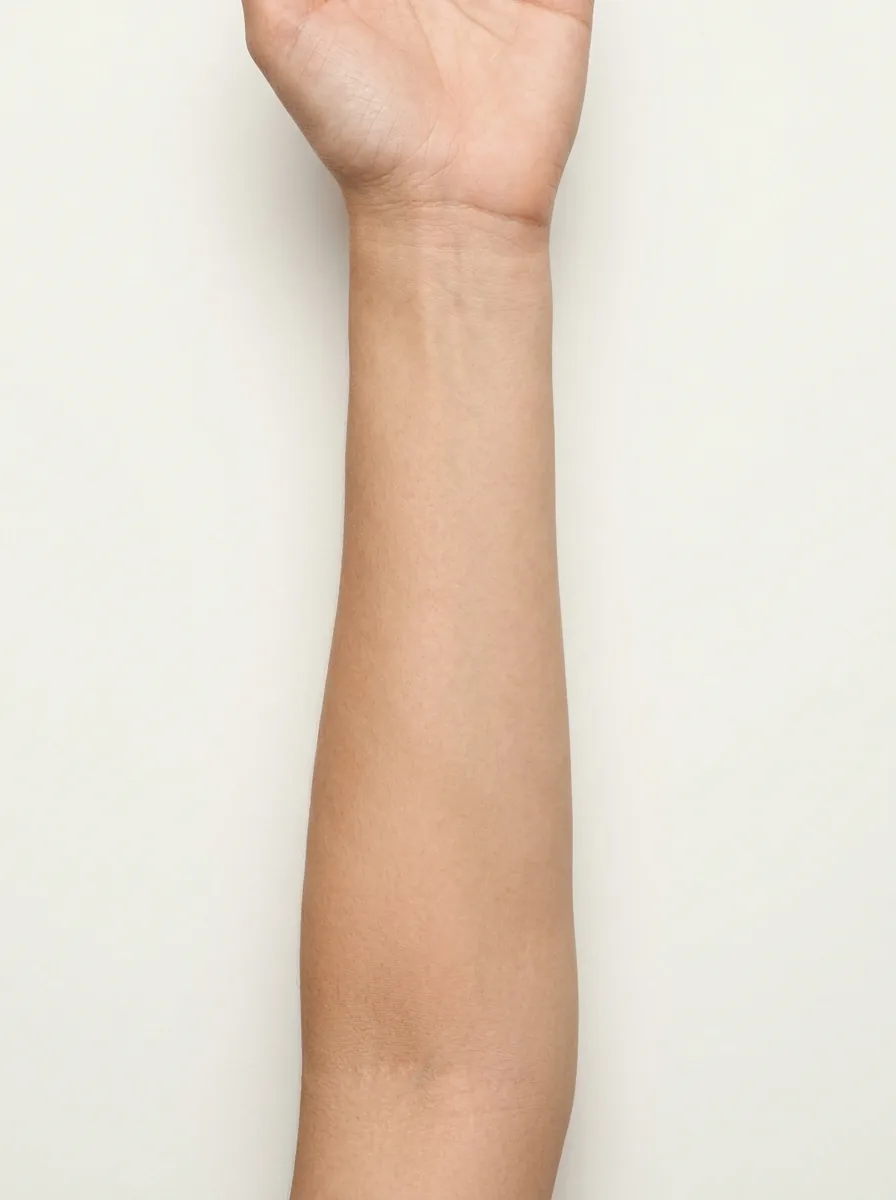
Forearm · vertical
Drag the kanji to move it.
This sits comfortably on a typical forearm.
The classic spot — a vertical column of kanji follows the arm naturally.
Mistakes are permanent — the check is free.
Most Natural Choice
The standard way to write Dylan in Japan is katakana: ディラン — the form used for Bob Dylan, and instantly recognizable because of him. Kanji is an artistic ateji choice, and Dylan is a hard case for a specific reason: the ディ sound is a modern katakana invention for foreign words, built by writing デ with a small ィ, and no kanji anywhere carries a 'di' reading. Kanji ateji must therefore route around it, either through ジ (the traditional substitution, as in ラジオ for radio) or through a plain デ that keeps the D but loses the glide. Every kanji Dylan is one of those two compromises. If sound is not the point for you, there is a third road worth considering: the name's Welsh meaning is the sea, and real Japanese words say that directly — 海 (umi, the sea), 潮 (shio, the tide), 蒼海 (sōkai, the blue deep). A meaning-based tattoo of that kind is unambiguous, elegant, and light on strokes; it simply will not spell your name.
治嵐
Reads 'Ji-ran.' The opening ディ has no kanji at all, so it takes the traditional Japanese substitution of ジ for a foreign 'di' — the same move that turned radio into ラジオ and Aladdin into アラジン. What is left is a genuinely good pair: 治 is one of the most established characters in Japanese men's names (治郎 Jirō, 治 Osamu), and its water radical is not decoration — the oldest attested use of 治 is as the name of a river, and in Chinese statecraft the word for governing has always run through 治水, flood control, which quietly answers Dylan's own 'great tide.' Together they read as mastering wind and water rather than being tossed by it. One caveat for the eye: 治 also carries the reading 'chi,' so some readers will try 'Chiran' first.
The strongest option here: two characters, 20 strokes, clean vertical or horizontal balance, no filler, and a meaning that lands on the sea imagery the name actually carries. It cannot be rated higher because it does not say Dylan — the D is gone, and the tattoo reads 'Jiran' (or possibly 'Chiran') to a native. Take it as an honest approximation with real meaning, not as a transcription.
侍嵐
Also 'Ji-ran,' with the same ジ standing in for the unwritable ディ. The reading 'ji' for 侍 is legitimate Sino-Japanese (侍従 jijū, an attendant to the throne), and the pairing has obvious force — a warrior and a storm, twenty strokes, nothing wasted. The honest problem is what a Japanese reader sees first: 侍 on its own is read samurai, so 侍嵐 registers as the phrase 'samurai storm' before anyone thinks of it as a name. That makes it a strong image and a weak transliteration, and it is worth knowing which of the two you are buying.
Visually the most striking option and the same efficient 20 strokes as the first, with two characters most Westerners already recognize. It stays at fair for the same phonetic reason — 'Jiran,' not Dylan — plus one of its own: natives read it as a two-word phrase rather than a name, so it will be understood as a slogan about samurai and storms. Fine if that is what you want on your arm; misleading if you expect people to read your name.
出嵐
This is the other road out of the ディ problem: instead of softening the sound to ジ, keep the D and accept a plain デ, giving 'De-ran' — a hair closer to Dylan for an English ear. 出 supplies that 'de' from its everyday kun reading (出口 deguchi), and the image is a good one for a sea name: setting out into the storm. The cost is Japanese reading habits. Mixing a kun reading with an on reading in a two-character word is unusual, so most natives will attempt 'Shutsuran' before they arrive at 'Deran.' One trap to note while you are here: do not swap 嵐 for 藍 (indigo) to get the same sound — 出藍 is a set phrase from a classical proverb about the student surpassing the master, and it will be read as that idiom, not as your name.
The lightest option at 17 strokes, and the only one that keeps Dylan's D consonant, which matters to some people more than anything else on this page. What it gives up is readability: the kun-plus-on combination is not how Japanese normally builds a two-character word, so the intended 'Deran' is the second or third guess rather than the first. Choose it as the D-preserving compromise with clear eyes about that.
Font Style Preview
See how each ateji looks in different Japanese font styles.
| Font | 治嵐 | 侍嵐 | 出嵐 |
|---|---|---|---|
| Serif | 治嵐 | 侍嵐 | 出嵐 |
| Sans | 治嵐 | 侍嵐 | 出嵐 |
| Yuji Mai | 治嵐 | 侍嵐 | 出嵐 |
| Yuji Syuku | 治嵐 | 侍嵐 | 出嵐 |
| Kouzan Syodou | 治嵐 | 侍嵐 | 出嵐 |
| Tamanegi Geki | 治嵐 | 侍嵐 | 出嵐 |
Ateji to Avoid
痔 reads 'ji' and is a short, simple character, exactly the sort of thing a sound-only converter can offer for the opening syllable of a ジ-route Dylan. It is a medical term: hemorrhoids. There is no context in which it appears in a name, so a Japanese reader spots it instantly and reads nothing else.
乱 is the most common kanji read 'ran' and will be near the top of any converter's list for the end of Dylan. It means disorder, riot, civil war — 戦乱, 反乱, 乱暴. Paired with almost anything it drags the whole name toward chaos and violence, and unlike a rare character it is one every Japanese person reads at a glance.
泥 has the reading 'dei' and looks tempting for the D-preserving route, but it means mud, and it heads the everyday word 泥棒 (dorobō, thief). Opening your name with it gives a native reader mud first and a thief a half-second later — the worst possible start for a name that is supposed to be about the sea.
Before You Ink
No kanji has ever been read 'di'
Japanese long ago lost the distinction between 'di' and 'ji' in speech. The kana ぢ still exists in modern spelling — it survives in words like はなぢ (nosebleed) and ちぢむ (to shrink) — but it is pronounced identically to じ, so the syllable a Westerner hears in 'Dylan' has no independent life in the language. To write foreign sounds, post-war katakana invented combinations like ディ, デ with a small ィ, purely as a spelling device. Kanji readings were fixed centuries before that, so no character carries ディ, and none ever will. The older loanwords show what Japanese did before the katakana workaround existed: radio became ラジオ, Aladdin became アラジン, dilemma became ジレンマ — the 'di' simply turned into 'ji.' That is why the honest kanji versions of Dylan read Jiran or Deran, and why anyone selling you a kanji string that supposedly says 'Dylan' exactly is not telling you the truth.
Build my kanji with AI →Frequently Asked Questions
Your name is yours — make sure the kanji are too
Ateji is a personal choice. Our AI proposes options based on the nuance you want, checks each character against the human-name kanji list, and explains the trade-offs in plain English.
Start my free kanji →