Kayla in Kanji
Kayla in Japanese kanji: 3 rated ateji with meanings, strokes, and tattoo risks. The sounds fit almost perfectly — and one careless character turns the ending into 'naked'.
At a Glance
| Kanji | Reading | Strokes | Tattoo |
|---|---|---|---|
| 慧良 | Keira | 22 | good |
| 圭羅 | Keira | 25 | good |
| 桂良 | Keira | 17 | fair |
Get AI-built ateji for “Kayla” in seconds — options matched to the nuance you want.
See your name in kanji free →See it on your body
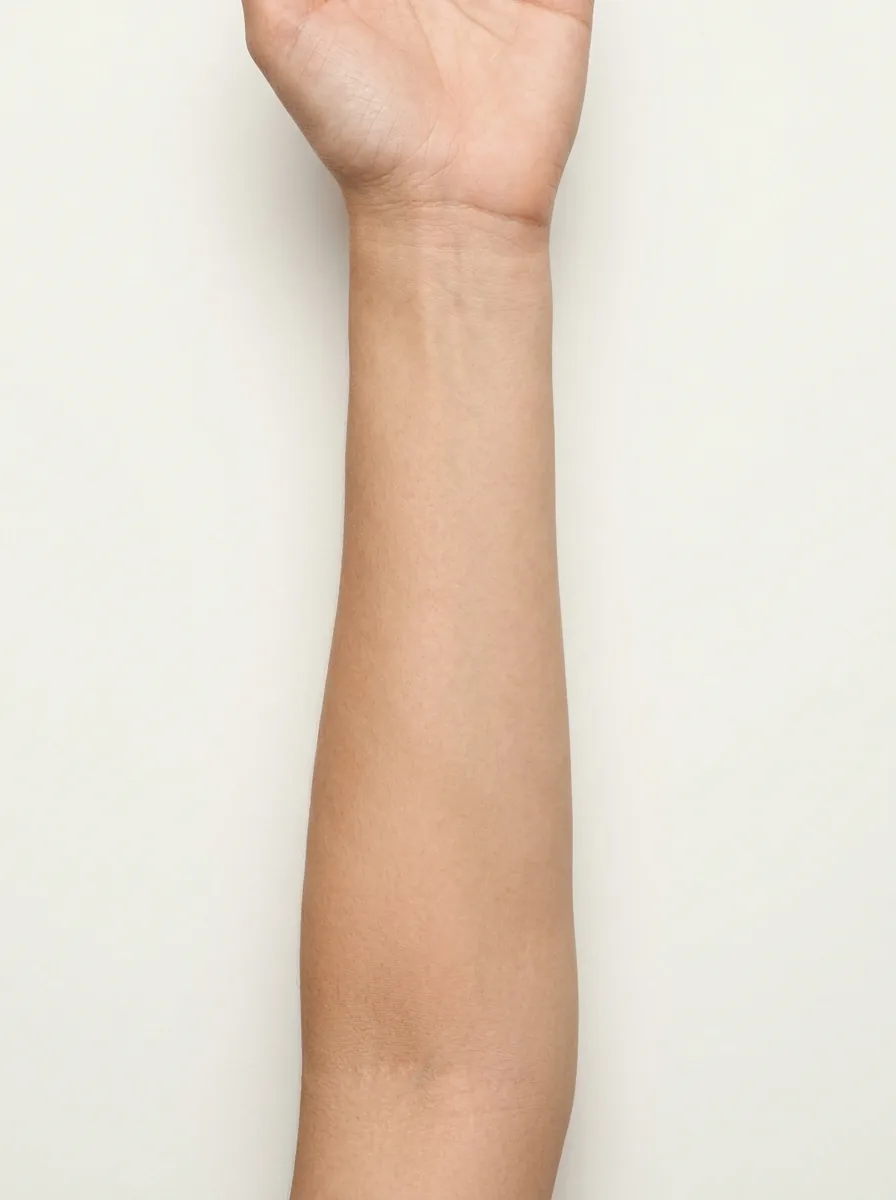
Forearm · vertical
Drag the kanji to move it.
This sits comfortably on a typical forearm.
The classic spot — a vertical column of kanji follows the arm naturally.
Mistakes are permanent — the check is free.
Most Natural Choice
For Kayla the standard, always-correct rendering is katakana: ケイラ — unambiguous, and what a Japanese newspaper or hotel register would use. Kanji is the artistic choice, and Kayla is one of the more cooperative Western names for it: three morae, no consonant clusters, nothing dropped along the way. The けい sound is a single Japanese unit and fits inside one character, so the entire name lands in two kanji — the exact length of a real Japanese given name rather than the four- and five-character bands that long English names force. What stops it short of being a native name is simply that けいら is not on the registers, even though close relatives like セイラ (Seira) and アイラ (Aira) are common in modern Japan. Expect your Kayla ateji to read as a convincing, well-formed name — not as a Japanese one.
慧良
Reads 'Kei-ra' with nothing dropped. Because けい (kei) is a single sound unit in Japanese, the whole name fits into two characters — the exact shape of a real Japanese given name, not a long transliterated band. 慧 carries the weight of 智慧 (chie) rather than the flatness of everyday signage vocabulary, and 良 gives 'ra' the same way it does in the place name 奈良. The image is 'wise and fine': restrained and adult, free of the sparkle that phonetic kanji often picks up. A Japanese reader will not mistake Keira for a native name, but will find the characters name-like and pronounce them correctly once told it is a name.
Phonetically complete — no sound dropped, bent, or padded — with two established name characters, a dignified meaning, and a very manageable 22 strokes. Two honest deductions keep it below excellent: 良 gives 'ra' only as a name reading (nanori), so the pronunciation is a convention rather than a default, and Keira is not itself a registered Japanese given name the way Ema or Mari are. It reads as an unusually well-made ateji, not as a native name.
圭羅
Also reads 'Kei-ra' exactly, and this is the version whose readings need no footnote: 圭 is a textbook けい (as in the common name 圭子, Keiko) and 羅 a textbook ら (羅針盤, rashinban, compass). The imagery is material rather than moral — polished jade and gossamer silk — which suits a decorative tattoo well. 羅 is a favorite in modern coined girls' names, so the pair reads a shade more fashionable and less classical than 慧良. Nothing here has to be explained to a native reader.
The cleanest readings on this page: both characters yield 'kei' and 'ra' as ordinary on'yomi, with no name-only conventions involved, so any Japanese reader sounds it out correctly on sight. The meaning — 'jade tablet and fine silk' — is elegant but ornamental rather than substantive, and 羅 packs 19 of the 25 strokes into a dense net-and-bird structure that needs reasonable size to stay crisp. Choose it if you want the version nobody has to puzzle over.
桂良
The lightest and most literary option: 17 strokes, and 桂 is the moon-tree of Chinese and Japanese classical verse, the same character that forms 桂冠 (keikan), the laurel crown of a victor — which quietly echoes the 'crown' sense sometimes given for Kayla. The sounds are identical to the other two candidates: 'Kei-ra', with nothing lost. The catch is readability. 桂 is far more often read 'katsura' — it is a common surname and the everyday name of the tree — so 桂良 can be sounded out several wrong ways before anyone arrives at Keira.
By far the lightest option here, and 17 strokes stays sharp at small sizes where 25-stroke versions start to fill in. The laurel and moon-tree imagery has real literary depth. It is marked down purely on readability: with 桂 defaulting to 'katsura' and 良 needing its name reading for 'ra', this is the one version a Japanese reader may genuinely mispronounce on first sight. Choose it for the image, not for being read correctly.
Font Style Preview
See how each ateji looks in different Japanese font styles.
| Font | 慧良 | 圭羅 | 桂良 |
|---|---|---|---|
| Serif | 慧良 | 圭羅 | 桂良 |
| Sans | 慧良 | 圭羅 | 桂良 |
| Yuji Mai | 慧良 | 圭羅 | 桂良 |
| Yuji Syuku | 慧良 | 圭羅 | 桂良 |
| Kouzan Syodou | 慧良 | 圭羅 | 桂良 |
| Tamanegi Geki | 慧良 | 圭羅 | 桂良 |
Ateji to Avoid
刑 reads 'kei' and is one of the highest-frequency kei characters in the language, which is exactly why sound-only converters offer it first — but it means criminal punishment: 刑罰 (keibatsu, penalty), 死刑 (shikei, the death sentence). Opening a name with it puts 'sentencing' at the head of your tattoo, and 刑 is common enough that every Japanese reader recognizes it instantly.
毛 is the single most common kanji read 'ke', so any tool that splits the name mora by mora into ケ・イ・ラ instead of treating けい as one unit will reach for it. It means hair — specifically body hair or fur (体毛 taimō, 抜け毛 nukege, hair loss). A native reader sees 'hair' first and a name never.
裸 reads 'ra' and is a perfectly valid phonetic match for the final sound of Kayla, which is how it turns up in automatic candidate lists. It means naked (裸体, ratai). One substitution at the end of the name converts an elegant two-character tattoo into a punchline, and unlike obscure traps this character is known to every Japanese schoolchild.
Before You Ink
Kayla lands one consonant away from a real Japanese name
Japanese girls' names ending in -ra are thoroughly at home in modern Japan: セイラ (Seira) and アイラ (Aira) appear on birth registers, written with characters such as 星来, 聖良 and 愛良. ケイラ has the identical rhythm and register — two kanji, three morae, a soft -ra ending — and sits one consonant away from Seira. That is why a Kayla ateji looks more convincing than most Western-name kanji: it is not a long transliterated band like ウィリアム or クリストファー, it is name-shaped. The one thing it cannot do is become native, because けいら itself is not a registered Japanese name. A Japanese reader will read your characters fluently, find them entirely plausible, and still know they are not looking at a Japanese woman's name. For a tattoo that is the correct expectation to have, and an entirely respectable place to land.
Build my kanji with AI →Frequently Asked Questions
Your name is yours — make sure the kanji are too
Ateji is a personal choice. Our AI proposes options based on the nuance you want, checks each character against the human-name kanji list, and explains the trade-offs in plain English.
Start my free kanji →