Robert in Kanji
Robert in Japanese kanji: 3 tattoo-ready ateji rated by meaning, strokes, and native readability — and the innocent-looking sound-match that secretly reads as a country name.
At a Glance
| Kanji | Reading | Strokes | Tattoo |
|---|---|---|---|
| 路波斗 | Robato | 25 | good |
| 路芭翔 | Robato | 32 | good |
| 呂波人 | Robato | 17 | fair |
Get AI-built ateji for “Robert” in seconds — options matched to the nuance you want.
See your name in kanji free →See it on your body
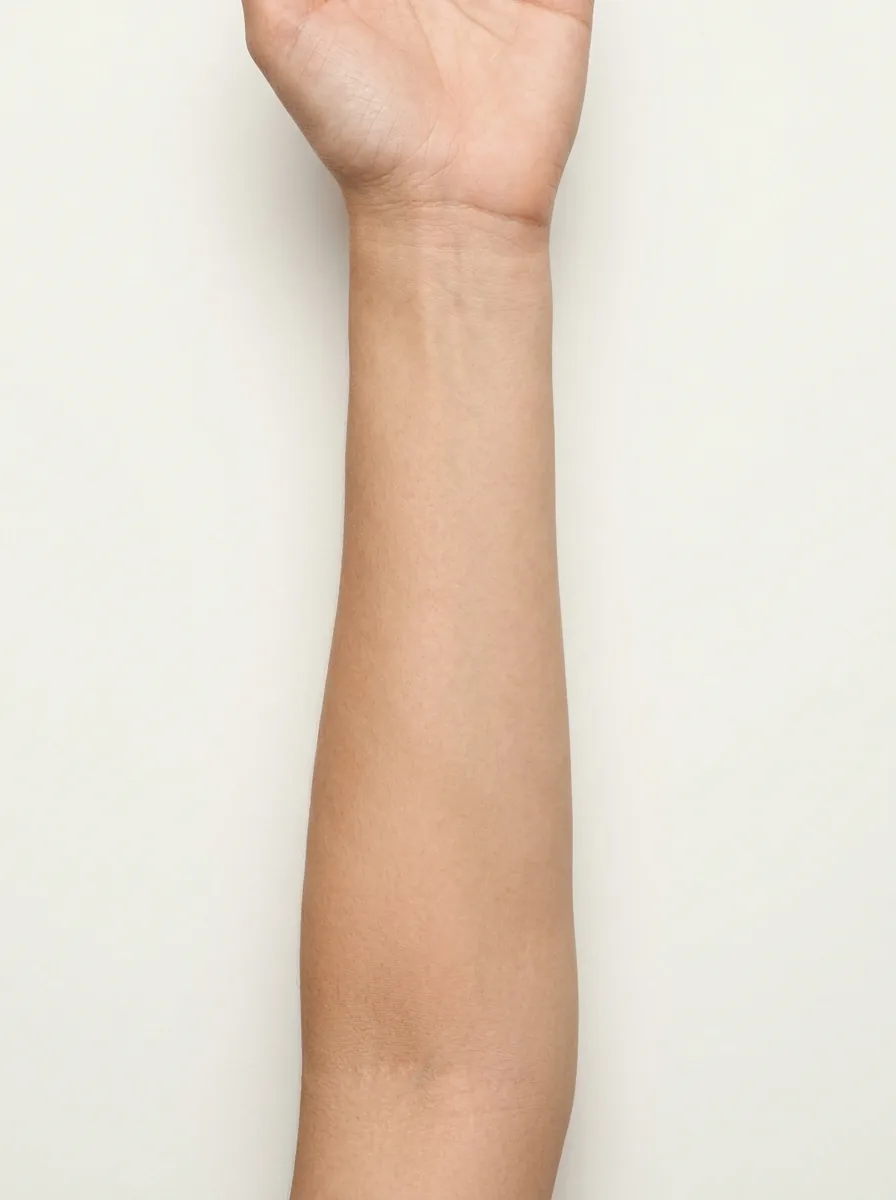
Forearm · vertical
Drag the kanji to move it.
This sits comfortably on a typical forearm.
The classic spot — a vertical column of kanji follows the arm naturally.
Mistakes are permanent — the check is free.
Most Natural Choice
For Robert the correct, standard rendering is katakana: ロバート. Kanji versions are artistic ateji, and Robert exposes a quirk of Japanese: the 'ro' sound has remarkably few usable kanji (路, 呂, and little else that isn't a trap), which is why the candidates above share their first character — an honest constraint, not laziness. The long 'bā' also shortens, so every kanji version reads 'Robato.' If meaning matters more than sound: Robert's etymology is 'bright fame,' which Japanese can express directly with 輝 (kagayaki, brilliance) — a meaning-first tattoo some Roberts prefer over phonetics.
路波斗
Reads 'Ro-ba-to,' dropping the long vowel of Robāto — the standard simplification. The three characters chain into real imagery: 'a road across the waves, steered by the Big Dipper' — a navigator's name. 斗 is one of the most popular finishers in current Japanese boys' names (海斗 Kaito, 悠斗 Yūto), which keeps the whole thing feeling modern and masculine. One honest note: 波 reads 'ba' only as the voiced form of 'ha,' as it does in the place name 難波 (Nanba) — legitimate, but a compound-style reading rather than a standalone one.
The best balance for Robert: coherent voyage imagery instead of random syllable-kanji, a genuinely fashionable name-ender in 斗, and a moderate 25 strokes. Held at good because the long 'bā' is shortened, and 波 as 'ba' leans on a voiced compound reading — honest, but a native reader needs half a beat to sound it out as a name.
路芭翔
Also 'Ro-ba-to,' with a literary spin: 芭 is best known as the signature character of Matsuo Bashō, Japan's greatest haiku poet and its most famous traveler — his 'Narrow Road to the Deep North' pairs beautifully with 路 (road). 翔 (soar) has ranked among the most-used kanji in Japanese boys' names for years, read 'to' in hits like 大翔 (Hiroto). The composite feeling: 'a poet's road, taken at full flight.' Caveats: 芭's literal meaning is just a plant, and 翔 as 'to' is a nanori (name-only) reading — standard in names, invisible in dictionaries.
The most stylish option: Bashō's wandering-poet resonance plus the ultra-popular 翔 gives it both classical and current appeal. It rates good, not excellent, because the phonetics stack two soft spots — the dropped long vowel and 翔's name-only 'to' reading — and 32 strokes wants a placement with some room.
呂波人
Reads 'Ro-ba-to' with the lightest ink load on this page. 人 as 'to' is fully legitimate — it is the ender of classic male names like 隼人 (Hayato) — and 波 again supplies the 'ba.' The weak link is 呂: its readings are honest (it is the standard 'ro' in old syllabary order, いろは), but its own meaning is thin — a musical tone, the spine — and modern readers meet it most often inside 風呂 (furo, bath). 'A person of tone and waves' is serviceable, not stirring.
Choose this only if minimal stroke count is the priority — 17 strokes reads cleanly at small sizes where the other two get dense. It rates fair because 呂 carries little meaning of its own and its strongest everyday association is the word for 'bath,' which drains gravitas from a name tattoo. Phonetically it is as valid as the others.
Font Style Preview
See how each ateji looks in different Japanese font styles.
| Font | 路波斗 | 路芭翔 | 呂波人 |
|---|---|---|---|
| Serif | 路波斗 | 路芭翔 | 呂波人 |
| Sans | 路波斗 | 路芭翔 | 呂波人 |
| Yuji Mai | 路波斗 | 路芭翔 | 呂波人 |
| Yuji Syuku | 路波斗 | 路芭翔 | 呂波人 |
| Kouzan Syodou | 路波斗 | 路芭翔 | 呂波人 |
| Tamanegi Geki | 路波斗 | 路芭翔 | 呂波人 |
Ateji to Avoid
露 reads 'ro' and looks poetic — it means 'dew.' The trap: 露 is also the standard single-character abbreviation for Russia (日露戦争, the Russo-Japanese War; 露国). A Japanese reader seeing it at the head of a name may parse 'Russia' before 'dew.' Not offensive, but not your name.
婆 reads 'ba' and phonetically fits the middle of Robert perfectly, but it means 'old woman, crone' (老婆). One character turns 'Robert' into something a Japanese reader cannot unsee. Never accept it from a converter.
罵 also reads 'ba' but means 'to revile, verbally abuse' (罵倒, batō). It is exactly the kind of dictionary-valid, meaning-disastrous match that automated tools produce for the 'ba' sound.
Before You Ink
Robert runs into Japanese's 'ro' shortage
Some syllables are rich in name-worthy kanji; 'ro' is not one of them. Beyond 路 (road) and the semantically thin 呂, most 'ro' kanji are traps — 露 doubles as the abbreviation for Russia, and 炉 is a furnace. That scarcity shapes every Robert ateji, which is why the strong options here all open with 路 and lean on their second and third characters (波 wave, 斗 Big Dipper, 翔 soar) for personality. The long vowel of ロバート also disappears in kanji, yielding 'Robato.' If that chain of compromises feels heavy, remember the name's own meaning — 'bright fame' — translates directly into kanji like 輝 (brilliance), a legitimate meaning-based alternative to phonetic spelling.
Build my kanji with AI →Frequently Asked Questions
Your name is yours — make sure the kanji are too
Ateji is a personal choice. Our AI proposes options based on the nuance you want, checks each character against the human-name kanji list, and explains the trade-offs in plain English.
Start my free kanji →