Stephanie in Kanji
Stephanie (ステファニー) in kanji uses ateji — phonetic characters for sound. Compare 寿天花仁, 須帆, and 寿帆仁 with stroke counts, meanings, and tattoo suitability.
At a Glance
| Kanji | Reading | Strokes | Tattoo |
|---|---|---|---|
| 寿天花仁 | Jutehani | 22 | fair |
| 須帆 | Suho | 18 | good |
| 寿帆仁 | Juhoni | 17 | good |
Get AI-built ateji for “Stephanie” in seconds — options matched to the nuance you want.
See your name in kanji free →See it on your body
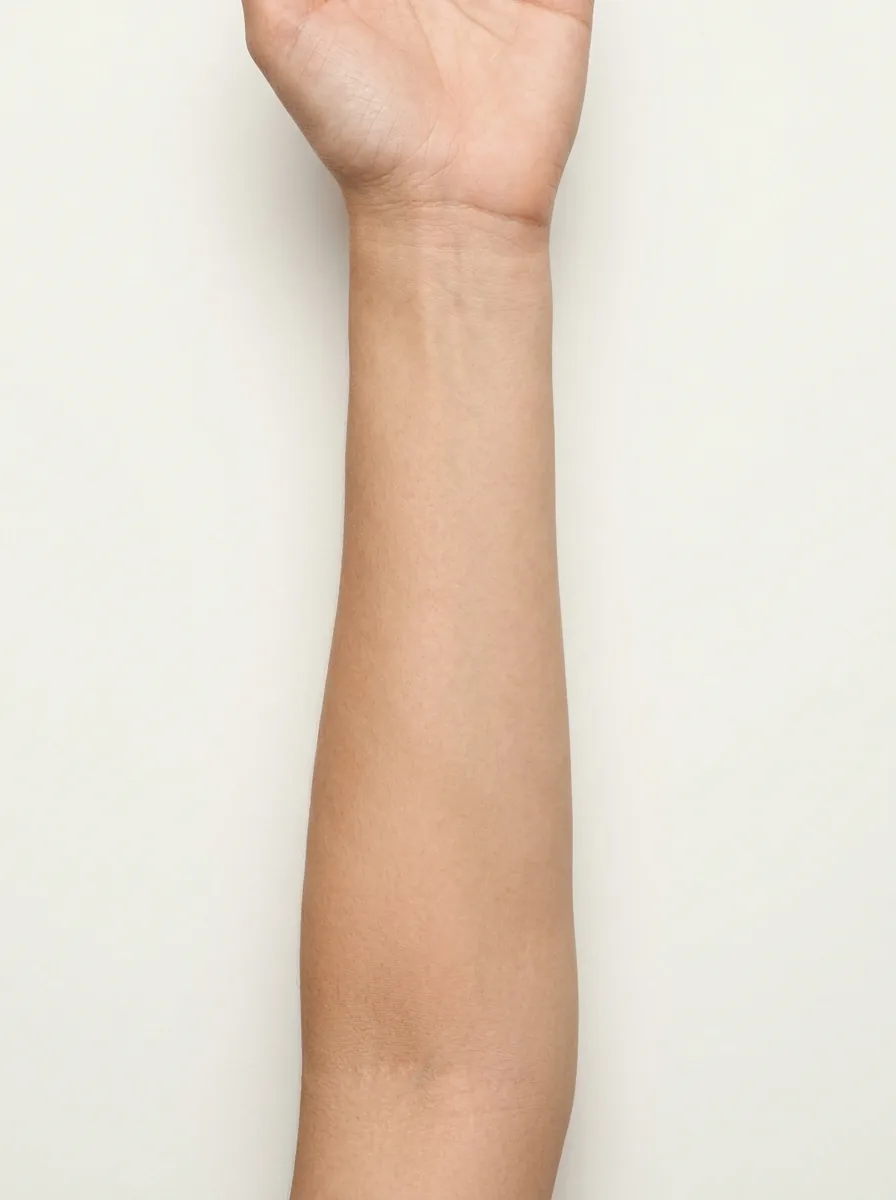
Forearm · vertical
Drag the kanji to move it.
This sits comfortably on a typical forearm.
The classic spot — a vertical column of kanji follows the arm naturally.
Mistakes are permanent — the check is free.
Most Natural Choice
Stephanie is one of the harder Western names for kanji because Japanese has no native 'fa' sound — it exists only as the foreign-loan kana ファ, which has no kanji that read it natively. Honest options are limited: a shortened 2-character form like 須帆 (Suho), a 3-character compromise like 寿帆仁 (Juhoni) that substitutes 'ho' for 'fa,' or a 4-character literal attempt that looks visually forced. The default rendering in Japan is overwhelmingly カタカナ (ステファニー).
寿天花仁
A 4-character literal phonetic attempt reading 'longevity, heaven, flower, benevolence.' Captures roughly 'Ju-te-ha-ni' — close to Stephanie's middle but losing the leading 'Su' and the 'fa' which has no kanji. The combination is uniformly positive but reads as a constructed string rather than a name.
All four kanji have positive meanings and are jinmeiyō-approved, but 4-character names are uncommon in modern Japanese (most are 1-3 characters) and look visually unbalanced as a tattoo. The 'fa' sound is structurally unrenderable in kanji, so phonetic completeness is impossible regardless of length.
須帆
A drastically shortened 2-character form covering only 'Suho' (substituting for 'Sute'). Reads as 'essential sail' — a real Japanese girl's name pattern. Sacrifices most of Stephanie's sound but reads cleanly as a Japanese name.
須帆 (Suho) is a documented modern Japanese female given name; the 帆 ending is also seen in names like Honoka (帆奈香) and Miho (美帆).
須帆 (Suho) is a documented modern Japanese girl's name. Both characters are common in real names and the visual balance is excellent. The honest tradeoff: enormous phonetic loss in exchange for cultural authenticity. Best for someone who wants any kanji rendering rather than full phonetic coverage.
寿帆仁
Reads as 'longevity, sail, benevolence' — a 3-character compromise covering Stephanie's middle and end. The 'fa' sound is replaced with 'ho' (帆 sail), which is a common ateji workaround for the unrenderable 'fa' kana. All three characters are common in real Japanese names.
Better balanced than the 4-character 寿天花仁 and more phonetically complete than 須帆. The 'ho' substitution for 'fa' is a recognized ateji technique. 17 strokes total gives clean tattoo legibility, and all three kanji read as feminine in this combination.
Font Style Preview
See how each ateji looks in different Japanese font styles.
| Font | 寿天花仁 | 須帆 | 寿帆仁 |
|---|---|---|---|
| Serif | 寿天花仁 | 須帆 | 寿帆仁 |
| Sans | 寿天花仁 | 須帆 | 寿帆仁 |
| Yuji Mai | 寿天花仁 | 須帆 | 寿帆仁 |
| Yuji Syuku | 寿天花仁 | 須帆 | 寿帆仁 |
| Kouzan Syodou | 寿天花仁 | 須帆 | 寿帆仁 |
| Tamanegi Geki | 寿天花仁 | 須帆 | 寿帆仁 |
Ateji to Avoid
A literal phonetic attempt for 'Sute-fu' using 捨 (discard), 手 (hand), 腐 (rotten). Each kanji is grammatically valid for its sound but the literal reading 'discard rotten hand' is openly negative and grotesque. Avoid any spelling that uses 捨, 腐, or other discard/decay kanji for sound matching.
酢 reads 'su' (vinegar) and is sometimes used phonetically. 酢 is a food kanji that reads literally as 'vinegar' on a tattoo before any phonetic intent is parsed — a textbook food-kanji ateji trap.
A 5-character full-phonetic attempt for 'Su-te-fu-a-ni.' Even setting aside the negative kanji, 5-character names do not exist in Japanese — they read as a sentence fragment, not a name. Strictly avoid forced spellings longer than 4 characters.
Before You Ink
Every Stephanie kanji is a compromise
Japanese has no native 'fa' sound, so every kanji form drops or substitutes syllables. Katakana (ステファニー) is often the most honest choice — and avoid 捨 (discard) or 腐 (rotten).
Build my kanji with AI →Frequently Asked Questions
Your name is yours — make sure the kanji are too
Ateji is a personal choice. Our AI proposes options based on the nuance you want, checks each character against the human-name kanji list, and explains the trade-offs in plain English.
Start my free kanji →