
Victoria in Kanji
Victoria in Japanese kanji: 3 tattoo-ready ateji rated by meaning, stroke count, and native readability — one of the rare names kanji can spell in full, at a price.
At a Glance
| Kanji | Reading | Strokes | Tattoo |
|---|---|---|---|
| 美久都莉亜 | Bikutoria | 40 | good |
| 美玖斗莉愛 | Bikutoria | 43 | good |
| 美久杜梨亜 | Bikutoria | 37 | fair |
Get AI-built ateji for “Victoria” in seconds — options matched to the nuance you want.
See your name in kanji free →See it on your body
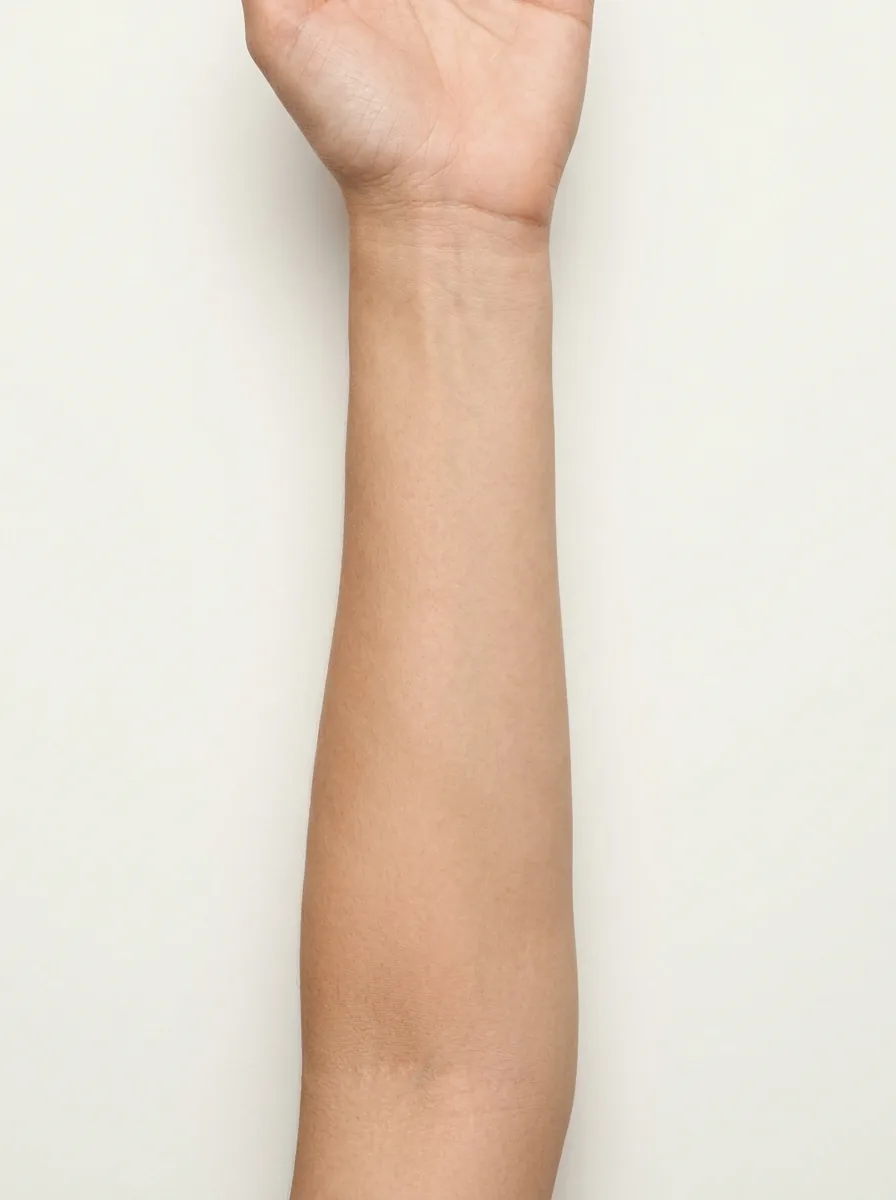
Forearm · vertical
Drag the kanji to move it.
This sits comfortably on a typical forearm.
The classic spot — a vertical column of kanji follows the arm naturally.
Mistakes are permanent — the check is free.
Most Natural Choice
For Victoria the correct and standard rendering is katakana: ビクトリア (you will also see ヴィクトリア, using ヴ to echo the English 'v' — both are correct, ビクトリア being the more common everyday form). Kanji is an artistic ateji choice, but Victoria is unusually kanji-friendly: all five syllables have honest kanji readings, so unlike most names nothing has to be dropped. The trade-off is sheer length — five characters, 37 to 43 strokes. There is also a meaning-first alternative: since Victoria literally means 'victory,' some people choose the single kanji 勝 (victory) or the word 勝利 (shōri) instead of spelling the sound. That is a translation, not a name rendering — a Japanese reader sees 'victory,' not 'Victoria.'
美久都莉亜
Reads 'Bi-ku-to-ri-a' — the complete name, with nothing dropped. Victoria is one of the rare Western names whose every syllable has a clean, honest kanji reading. The imagery is 'enduring beauty, an elegant capital, jasmine': 美, 久, and 莉 are all staples of real Japanese girls' names, 都 adds cosmopolitan polish (Miyako), and 亜 is a common modern name-ender. The cost is length — five characters is unmistakably a transliteration, not a native name.
Phonetically complete and honest — every reading is a textbook one, which very few foreign names can achieve. The meanings are graceful and every character is name-legitimate. What holds it at 'good': five kanji is long for a tattoo, and no Japanese given name runs five characters, so it reads as an elegant transliteration rather than a plausible name.
美玖斗莉愛
Also reads 'Bi-ku-to-ri-a' in full. This is the celestial version: 'a beautiful dark jewel, the Big Dipper, jasmine, love.' 玖 is a jinmeiyō gem character prized in modern names, 斗 brings the night-sky romance of 北斗 (the Big Dipper) and is hugely popular in current names, and closing on 愛 (love) — read 'a' as in the real name 心愛 (Kokoa) — gives the name a warm final note. The 'a' reading of 愛 is a nanori (name-only) reading, well established in modern naming but softer ground than a textbook on'yomi.
The most romantic imagery of the three — jewels, stars, and love — with every character fashionable in modern Japanese names. Phonetically complete. Two soft spots keep it at 'good': 愛 read as 'a' is a name-only reading (real, as in 心愛, but not obvious to every reader), and at five characters and 43 strokes it is a substantial piece of ink.
美久杜梨亜
Also reads 'Bi-ku-to-ri-a' in full, with nature-forward imagery: 'enduring beauty, a sacred grove, pear blossom.' 杜 evokes the hushed forest around a Shinto shrine (Sendai is called 杜の都, 'city of groves'), and 梨 (pear) is a favorite in girls' names like Airi. The lightest stroke count of the three. The catch: 杜 is usually read 'mori,' and its 'to' on'yomi, while genuine, is not the first reading that comes to a Japanese mind.
The lightest and most nature-toned candidate, with the lovely shrine-grove image of 杜. It is held to 'fair' by readability: most Japanese readers see 杜 and think 'mori' (forest) before 'to,' so the intended sound is likelier to be misread than with 都 or 斗. Choose it for the imagery and lighter ink; choose candidate 1 or 2 for surer phonetics.
Font Style Preview
See how each ateji looks in different Japanese font styles.
| Font | 美久都莉亜 | 美玖斗莉愛 | 美久杜梨亜 |
|---|---|---|---|
| Serif | 美久都莉亜 | 美玖斗莉愛 | 美久杜梨亜 |
| Sans | 美久都莉亜 | 美玖斗莉愛 | 美久杜梨亜 |
| Yuji Mai | 美久都莉亜 | 美玖斗莉愛 | 美久杜梨亜 |
| Yuji Syuku | 美久都莉亜 | 美玖斗莉愛 | 美久杜梨亜 |
| Kouzan Syodou | 美久都莉亜 | 美玖斗莉愛 | 美久杜梨亜 |
| Tamanegi Geki | 美久都莉亜 | 美玖斗莉愛 | 美久杜梨亜 |
Ateji to Avoid
鼻 reads 'bi' and means 'nose.' It is a phonetically clean match for Victoria's first syllable and a genuinely absurd character to find in a name tattoo — exactly the kind of pick a sound-only converter can make.
苦 reads 'ku' and means 'suffering, bitterness' (as in 苦しみ, anguish). It is one of the most tempting sound matches for Victoria's second syllable and one of the worst possible meanings to wear permanently.
痢 reads 'ri' and appears in 下痢 (geri, diarrhea). A clean phonetic match for the 'ri' in Victoria, and a classic trap kanji for any name containing that sound.
Before You Ink
Victoria can be spelled in full — or translated as 'victory'
Most Western names lose a sound on the way into kanji; Victoria keeps all five, which makes it one of the most complete ateji candidates in this collection. It also has a second, entirely different route: the name is simply the Latin word for victory, so 勝 (win/victory) or 勝利 (shōri) translate its meaning in one or two bold strokes-worth of characters. Know what each route says: the five-character ateji sounds like Victoria but reads as decoration; 勝 reads instantly as 'victory' but says nothing about your name. Mixing up the two — or believing one does both jobs — is where Victoria tattoos go wrong.
Build my kanji with AI →Frequently Asked Questions
Your name is yours — make sure the kanji are too
Ateji is a personal choice. Our AI proposes options based on the nuance you want, checks each character against the human-name kanji list, and explains the trade-offs in plain English.
Start my free kanji →