Kanji for PeaceMeanings & Tattoo Guide
和, 平, 安, 静 can all translate as "peace" — but they mean very different things, and one reads as "cheap" on its own. Find the right peace kanji before it's permanent.
At a Glance
| Kanji | Meaning | Reading | Strokes | Tattoo |
|---|---|---|---|---|
| 和 | Harmony, peace, Japanese | wa | 8 | excellent |
| 平 | Peace, flat, even, calm | hei | 5 | excellent |
| 安 | Peaceful, quiet, secure, at ease | yasu | 6 | good |
| 静 | Quiet, calm, still, peaceful | shizuka | 14 | excellent |
Not sure which one fits your meaning? “Peace” can translate differently depending on context.
Check your kanji for free →See it on your body
Forearm · vertical
Drag the kanji to move it.
This sits comfortably on a typical forearm.
The classic spot — a vertical column of kanji follows the arm naturally.
Mistakes are permanent — the check is free.
和 — Harmony, peace, Japanese
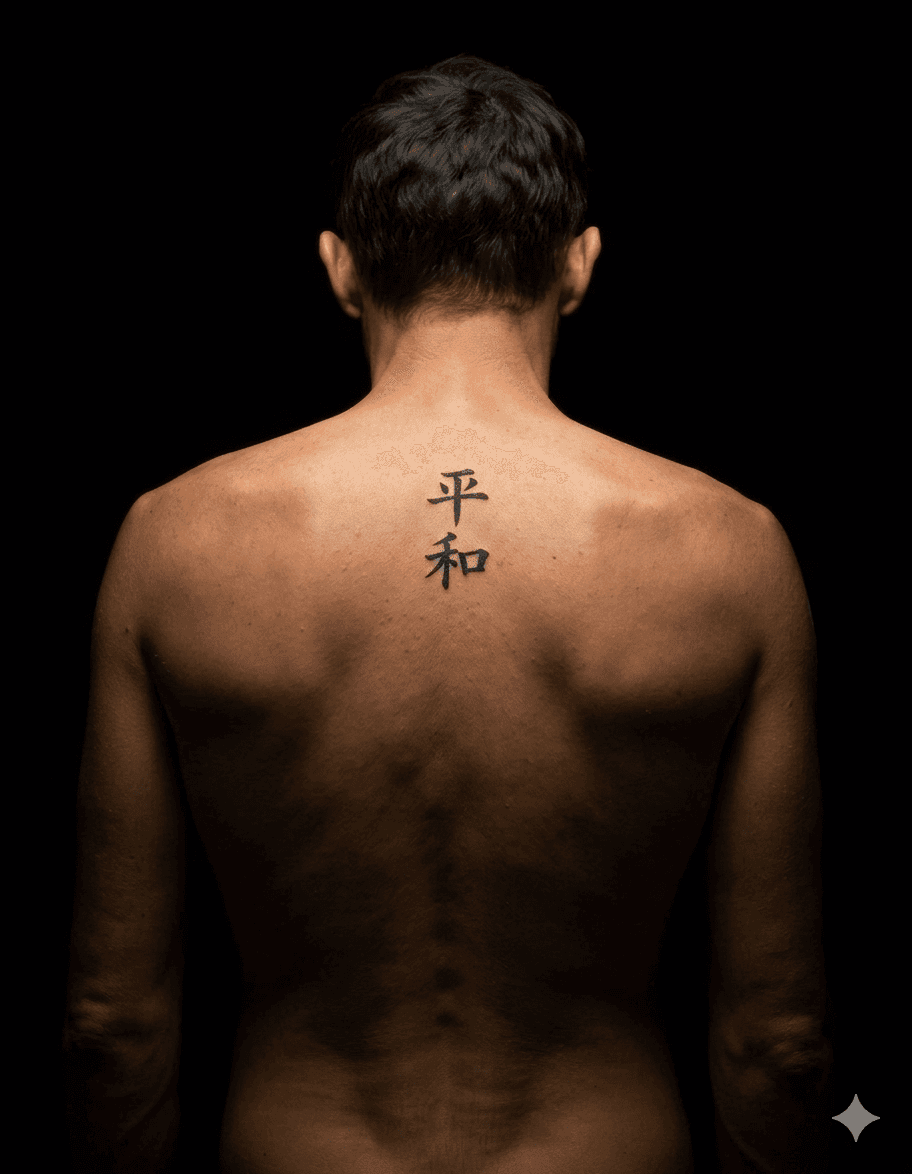
和 is arguably the most culturally loaded kanji in Japan — it represents harmony, social balance, and peace all at once. It's also used as a prefix for anything distinctly Japanese (和食 washoku — Japanese food, 和服 wafuku — Japanese clothing). The concept of 和 was codified by Prince Shotoku's 604 CE constitution, which opened with "Harmony is to be valued." The character combines 禾 (grain) and 口 (mouth), suggesting the peace that comes from shared food and communication.
Extremely common. Found in 平和 (heiwa — peace), 調和 (chouwa — harmony), 和やか (nagoyaka — peaceful, calm), and countless Japan-specific terms like 和風 (wafuu — Japanese style). It is also a very popular given name and surname component.
A highly respected, deeply meaningful kanji with only 8 strokes — clean, balanced, and legible at any size. Its dual meaning of "harmony" and "Japan" gives it layered significance. One of the most popular kanji tattoo choices worldwide, yet never feels cliché.
平 — Peace, flat, even, calm
平 represents peace as a state of flatness and stability — the absence of conflict, turbulence, or disruption. The character is thought to depict water lilies floating on calm water, suggesting tranquility. It's half of 平和 (heiwa), the standard Japanese word for peace. The Heian Period (794–1185 CE) — named after 平安 (heian — peaceful tranquility) — is remembered as Japan's golden age of literature and culture.
Common across many contexts. Found in 平和 (heiwa — peace), 平安 (heian — tranquility), 平等 (byoudou — equality), 平凡 (heibon — ordinary), and 平成 (heisei — name of the era 1989–2019).
At only 5 strokes, 平 is one of the cleanest kanji for peace — perfect for small, minimalist tattoos. Its historical connection to the Heian Period gives it cultural weight. Works beautifully in any font and almost any size. Great standalone or paired with 和 to form 平和.
安 — Peaceful, quiet, secure, at ease
安 represents inner peace and security — the quiet reassurance of safety and comfort. The character depicts a woman (女) under a roof (宀), symbolizing domestic peace and security. Beyond literal peace, 安 carries connotations of mental calm and freedom from worry, making it one of the most emotionally resonant kanji for "peace of mind." It's also half of 安心 (anshin — peace of mind), a deeply valued concept in Japanese culture.
Extremely common. Found in 安心 (anshin — peace of mind, relief), 安全 (anzen — safety), 平安 (heian — tranquility), 安定 (antei — stability), and 安らぎ (yasuragi — tranquility, comfort). Also appears in many common names.
A lovely choice for those seeking inner peace rather than political peace. The 6 strokes are simple and clean, and the visual composition (woman under a roof) carries a warm, protective feeling. Slightly less associated with "peace" alone in English-speaking contexts, which actually makes it more unique as a tattoo.
静 — Quiet, calm, still, peaceful
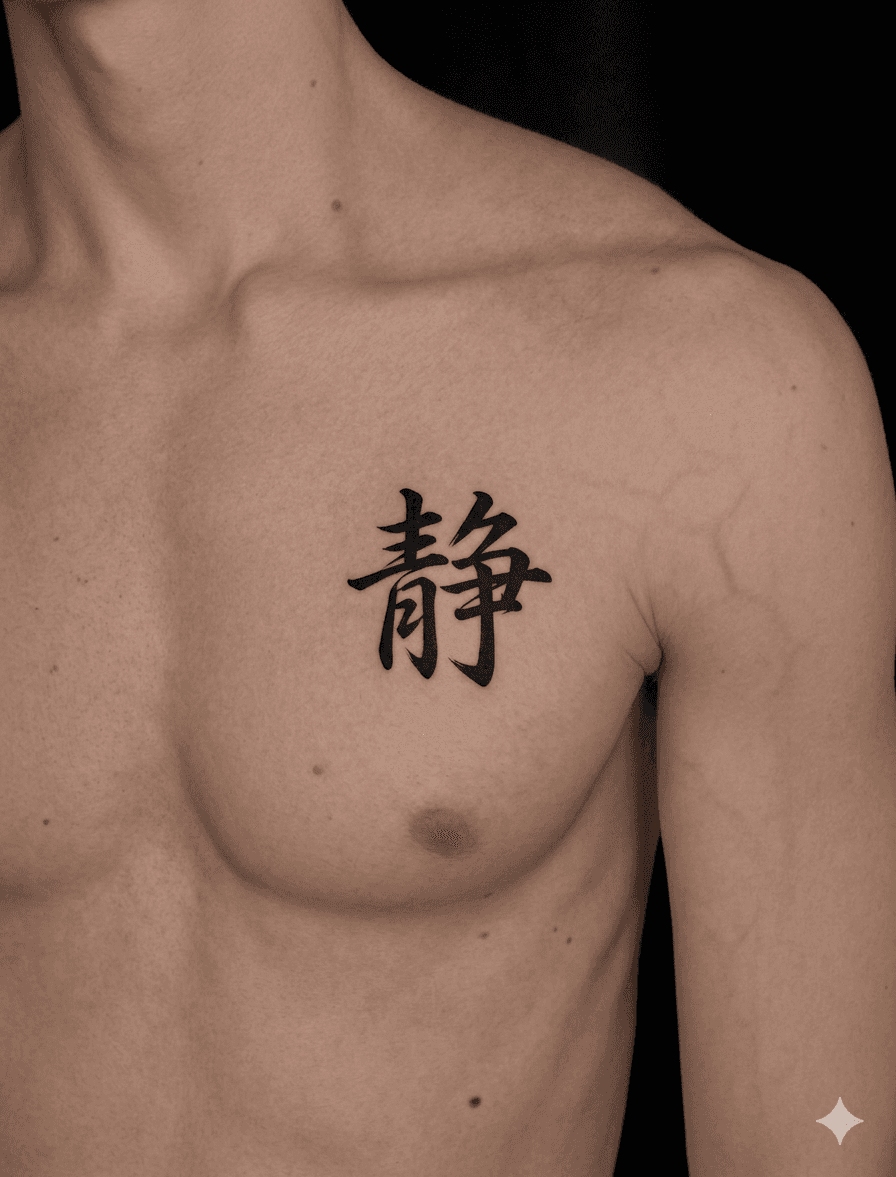
静 represents peace as stillness and quietude — the serene calm of a Zen temple garden, undisturbed water, or a silent forest. It is closely tied to Japanese aesthetic ideals of 静寂 (seijaku — tranquil silence), one of the key principles of traditional Japanese gardens, tea ceremony, and Zen Buddhism. The character combines 青 (blue/fresh) with 争 (dispute), suggesting the resolution of conflict into stillness.
Common in literary, aesthetic, and meditative contexts. Found in 静か (shizuka — quiet), 冷静 (reisei — calm, composed), 静寂 (seijaku — tranquil silence), 安静 (ansei — rest, quiet), and 平静 (heisei — composure). Widely used in names, especially 静香 (Shizuka).
A visually striking character that captures peace as meditative stillness. The 14 strokes create a complex, elegant form that looks magnificent in brush calligraphy. Particularly meaningful for those drawn to Zen philosophy, mindfulness, or inner tranquility. Requires medium-to-large size for clarity.
Font Style Preview
See how each kanji looks in different Japanese font styles.
| Font | 和 | 平 | 安 | 静 |
|---|---|---|---|---|
| Serif | 和 | 平 | 安 | 静 |
| Sans | 和 | 平 | 安 | 静 |
| Yuji Mai | 和 | 平 | 安 | 静 |
| Yuji Syuku | 和 | 平 | 安 | 静 |
| Kouzan Syodou | 和 | 平 | 安 | 静 |
| Tamanegi Geki | 和 | 平 | 安 | 静 |
Common Mistakes to Avoid
戦 means war or battle — the exact opposite of peace. It's occasionally confused because it appears in phrases about peace (e.g., "no more war"). Getting 戦 tattooed when you meant peace would be a painful irony.
Some interpret "rest in peace" too literally and consider 死 (death). This is a major mistake — 死 simply means death and carries none of the peaceful connotations of the English phrase. It looks ominous and morbid as a standalone tattoo. Use 安 or 安らぎ instead for peaceful rest.
Context-specific errors are harder to catch. The kanji for “inner calm of mind” vs “harmony between people” vs “absence of conflict” each require different characters. A wrong choice isn't always obvious until a native speaker sees it.
Verify your phrase with AI before you ink →Frequently Asked Questions
This page covers generic “peace” — but your tattoo is personal
The right kanji depends on your exact phrase, intended nuance, and personal context. Our AI translates your specific meaning into authentic Japanese — with cultural verification and tattoo-ready exports.
Verify your kanji before you ink →