Justice in KanjiMeanings & Tattoo Guide
義 = righteousness, 正 = correctness, 公 = impartiality, 法 = law. Compare 4 justice kanji with cultural context, stroke counts, and tattoo suitability.
At a Glance
| Kanji | Meaning | Reading | Strokes | Tattoo |
|---|---|---|---|---|
| 義 | Righteousness, moral duty, justice | gi | 13 | excellent |
| 正 | Correct, right, upright | tadashii | 5 | excellent |
| 公 | Public, impartial, fair | kou | 4 | good |
| 法 | Law, rule, dharma | hou | 8 | good |
Not sure which one fits your meaning? “Justice” can translate differently depending on context.
Check your kanji for free →See it on your body
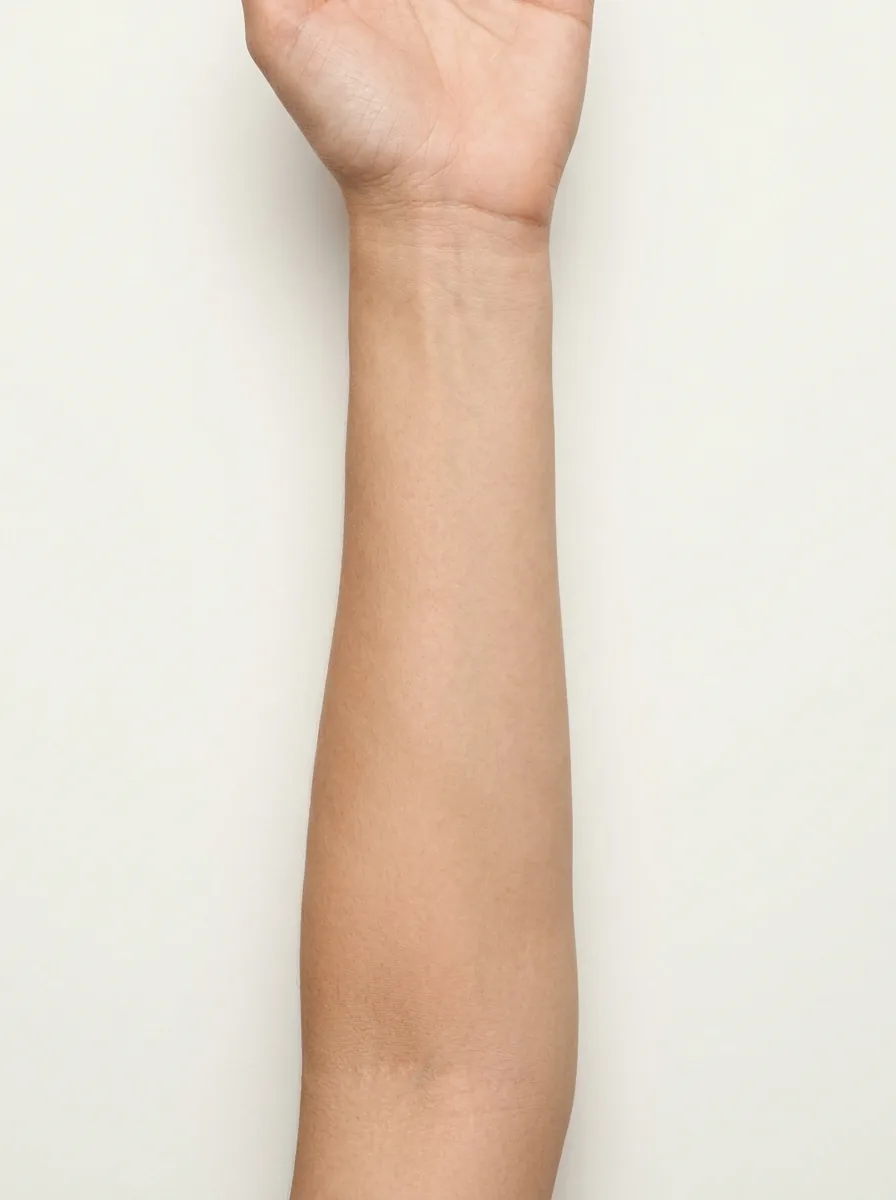
Forearm · vertical
Drag the kanji to move it.
This sits comfortably on a typical forearm.
The classic spot — a vertical column of kanji follows the arm naturally.
Mistakes are permanent — the check is free.
義 — Righteousness, moral duty, justice
義 is the core kanji of Japanese moral philosophy — the obligation to do what is right regardless of cost. It is one of the seven virtues of Bushido (武士道), where 義 represents the samurai's duty to act with rectitude. The compound 正義 (seigi) is the standard Japanese word for justice. Importantly, 義 is closer to 'righteousness in action' than to 'justice as a legal system' — it is what you owe, morally, to others and to yourself. In Confucian thought, 義 stands opposite to 利 (personal gain).
Common in formal, literary, and martial contexts. Found in 正義 (seigi — justice), 義務 (gimu — obligation, duty), 義理 (giri — duty, social obligation), 義士 (gishi — righteous person, hero), and 信義 (shingi — fidelity, faith). Less casual than 正 or 公, with a weighty moral tone.
Carries deep cultural weight as a Bushido virtue and reads instantly as righteousness or justice. The 13 strokes balance well in any font and look powerful in brush calligraphy. Be aware of the dual reading — Japanese viewers may also interpret 義 as 'duty' or 'obligation' rather than the English 'justice as fairness.'
⚠ 義 also appears in 義父 (gifu — father-in-law), 義兄 (gikei — brother-in-law), 義手 (gishu — prosthetic hand), where it carries the meaning 'in-law' or 'artificial / substitute.' On its own as a tattoo it reads as righteousness, but a Japanese viewer may briefly register the 'in-law / artificial' association before settling on the moral meaning.
正 — Correct, right, upright
正 is the kanji of correctness — what is straight, true, and aligned with reality. Originally a pictograph showing a foot stopping at a target, 正 carries the sense of arriving exactly where one ought to. It is the first character of 正義 (seigi — justice) and pairs with countless concepts where rightness matters: 正直 (honesty), 正解 (correct answer), 正論 (sound argument). Where 義 emphasizes what one owes morally, 正 emphasizes what is objectively true and proper.
Extremely common in everyday Japanese. Found in 正義 (seigi — justice), 正直 (shoujiki — honest), 正解 (seikai — correct answer), 公正 (kousei — fairness), and 修正 (shuusei — correction, revision). Used across casual and formal contexts.
Clean, minimal, and immediately readable. The 5 strokes are some of the most visually balanced in the Japanese writing system — looks elegant at any size. Versatile meaning ('correct, right, just') makes it broadly understood without ambiguity. A safe and respected choice for a justice tattoo.
公 — Public, impartial, fair
公 originally meant the public sphere as opposed to the private (私). From this, it grew to mean fairness and impartiality — what is decided in the open, without favoritism. 公正 (kousei) is the standard Japanese word for fairness or impartiality, and 公平 (kouhei) means even-handedness. In feudal Japan, 公 was also used as a respectful suffix for nobles and officials, suggesting that those in public office were expected to embody this virtue. Of the four kanji here, 公 most closely matches the English sense of 'justice as fairness.'
Very common in formal and civic contexts. Found in 公正 (kousei — fairness), 公平 (kouhei — impartiality), 公共 (koukyou — public), 公開 (koukai — open to the public), and 公務員 (koumuin — civil servant).
Minimalist with only 4 strokes, looks clean and modern in any style. Best suited for those whose concept of justice is closer to fairness or impartiality than to moral righteousness. On its own 公 leans slightly toward 'public' rather than 'just,' so consider pairing with another character (公正) if the fairness meaning is what you want emphasized.
⚠ On its own, 公 also reads simply as 'public' — and historically as a noble title (e.g., 信長公 — Lord Nobunaga). A Japanese viewer may read a standalone 公 as 'public' or 'lord' before 'fairness.' For a clearly-justice tattoo, 正義 or 公正 are less ambiguous.
法 — Law, rule, dharma
法 originally referred to law and rules in the legal sense, but in Japanese Buddhism it took on a deeper meaning: the dharma — the truth of how things are. 仏法 (buppou) means Buddhist teaching, and 法 in this sense is closer to a universal moral order than a courtroom statute. The character combines 氵 (water) and 去 (depart) — water taking its proper course, an apt metaphor for justice. Of the four kanji, 法 is the most institutional, and the most explicitly tied to the rule of law as a system.
Common in legal, philosophical, and Buddhist contexts. Found in 法律 (houritsu — law), 法廷 (houtei — court), 憲法 (kenpou — constitution), 仏法 (buppou — Buddhist law/dharma), and 方法 (houhou — method, way). Carries a slightly formal or institutional tone.
Distinctive and visually balanced — the 氵 (water) radical on the left adds flowing elegance. Best suited for those whose justice means law, structure, or dharmic truth rather than personal righteousness. Less common as a tattoo than 義 or 正, giving it more uniqueness. Be aware that 法 reads more as 'law / rule' than 'justice' to most Japanese viewers.
Font Style Preview
See how each kanji looks in different Japanese font styles.
| Font | 義 | 正 | 公 | 法 |
|---|---|---|---|---|
| Serif | 義 | 正 | 公 | 法 |
| Sans | 義 | 正 | 公 | 法 |
| Yuji Mai | 義 | 正 | 公 | 法 |
| Yuji Syuku | 義 | 正 | 公 | 法 |
| Kouzan Syodou | 義 | 正 | 公 | 法 |
| Tamanegi Geki | 義 | 正 | 公 | 法 |
Common Mistakes to Avoid
Sometimes suggested for tattoos themed around 'justice will be served' or 'vigilante justice,' but 罰 specifically means punishment — the sentence handed down, not justice itself. As a standalone tattoo, 罰 reads as 'penalty' or 'sentence' to a Japanese viewer, with no positive moral connotation. If you want the dispenser-of-justice meaning, 正義 or 義 fit better.
裁 appears in 裁判 (saiban — trial) and 裁判官 (judge), so it's connected to the courtroom — but its primary meanings are 'to cut' and 'to tailor (cloth).' On its own as a tattoo, 裁 reads first as 'cut' or 'tailor' rather than 'justice / judgment.' This is a common false-friend for Western readers researching 'judge / justice' translations.
Context-specific errors are harder to catch. The kanji for “righteous duty” vs “objective rightness” vs “impartial fairness” each require different characters. A wrong choice isn't always obvious until a native speaker sees it.
Verify your phrase with AI before you ink →Frequently Asked Questions
This page covers generic “justice” — but your tattoo is personal
The right kanji depends on your exact phrase, intended nuance, and personal context. Our AI translates your specific meaning into authentic Japanese — with cultural verification and tattoo-ready exports.
Verify your kanji before you ink →